The Taxonomy of Neurosis: Yves Netzhammer
❉ This is the tenth in a series of blogs that discuss diagrams in the fine arts and sciences. I recently completed my PhD on this subject at Kyoto City University of the Arts, Japan's oldest Art School. Feel free to leave comments or to contact me directly if you'd like any more information on life as an artist in Japan, what a PhD in Fine Art involves, applying for the Japanese Government Monbusho Scholarship program (MEXT), or to talk about diagrams and diagrammatic art in general.
Figures 1, 2: Yves Netzhammer, digital drawings, 2010
The working process of Swiss artist Yves Netzhammer begins with what he calls his 'stockpile of conjectures'—a growing body of refined diagrammatic sketches that function as both a process of visual thinking and source material for his finished works.
His distinctive aesthetic arises from his use of computer illustration and 3D modeling, a method that distances the artist's hand and results in an economized language of line, form, color, and movement. This approach yields imagery purified of irregularities, presented in an airless, ideal realm reminiscent of what Duchamp termed "paintings of precision."

Figure 3: Yves Netzhammer, Untitled, (Seilzeichnung / Rope drawing), 2011,
Rope, metal, wood, glass and colour, variable dimensions
An Aesthetics of Essence
Netzhammer's visual world is deliberately reduced, populated by figures reminiscent of mannequins, crash-test dummies, or anatomical models [2]. This purification aligns with what Roland Barthes observed in the plates of Diderot’s Encyclopédie. In his short essay 'The Plates of the Encyclopedia', Barthes argued that the Encyclopedic diagram achieves its clarity by extracting the object from history and context, presenting its pure essence.
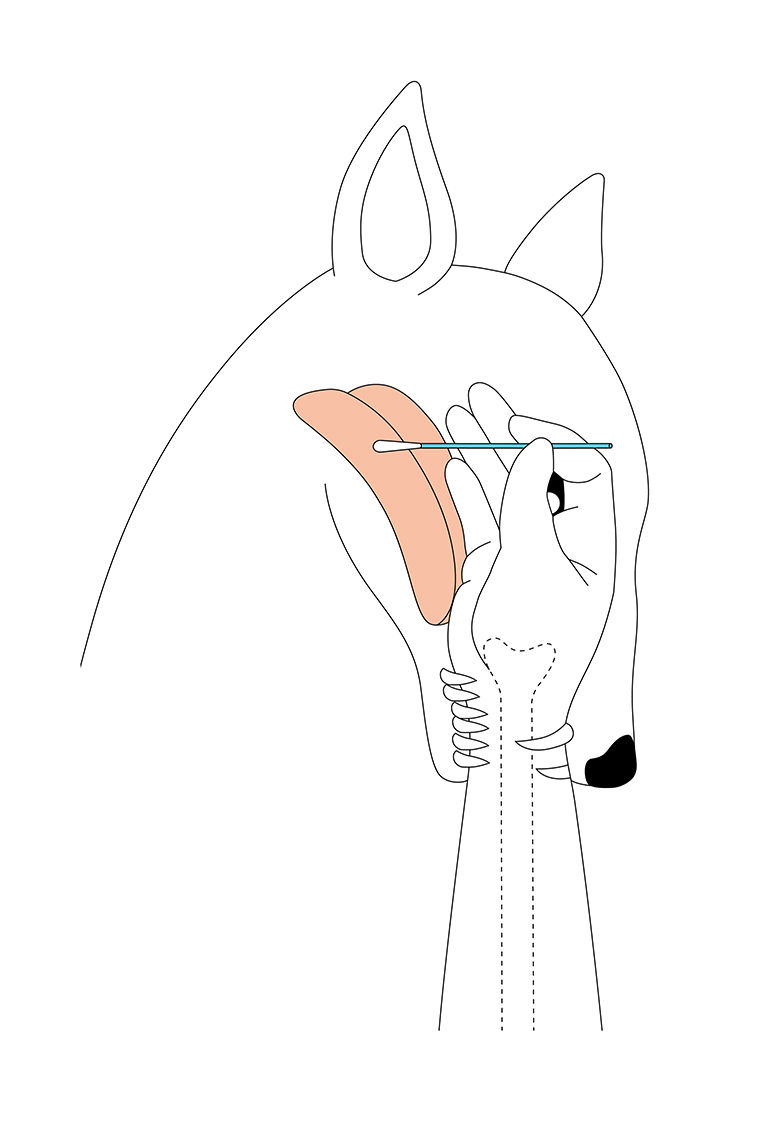
Figure 4: Digital drawing for Seilzeichnung (Rope drawing), 2011
In such images, "the object is thus purified of any motive or circumstance... what is represented is what has no history" (1). Netzhammer employs a similar strategy; his protagonists forgo individual personality traits, becoming archetypal figures representing the essence of existence (2). By removing the contingencies of the real, he creates what Barthes described as "a paradoxical object: a flat image which gives a profound impression of order" (1). This clinical, almost antiseptic aesthetic becomes a crucial element in the work's emotional impact.

Figures 5: Yves Netzhammer, digital drawings, 2010
A Semiotics of Empathy
In this visually austere and ordered world, emotion is conveyed not through facial expression—his figures have no faces, no eyes—but through the body's actions and gestures. Netzhammer constructs what could be termed a "meta-semantics of physical expression," a semiotic system where meaning arises from the repetition and sequence of physical movements [2]. We, as viewers, recognize these gestures through our own experience, associating them with our own inner states and emotions.
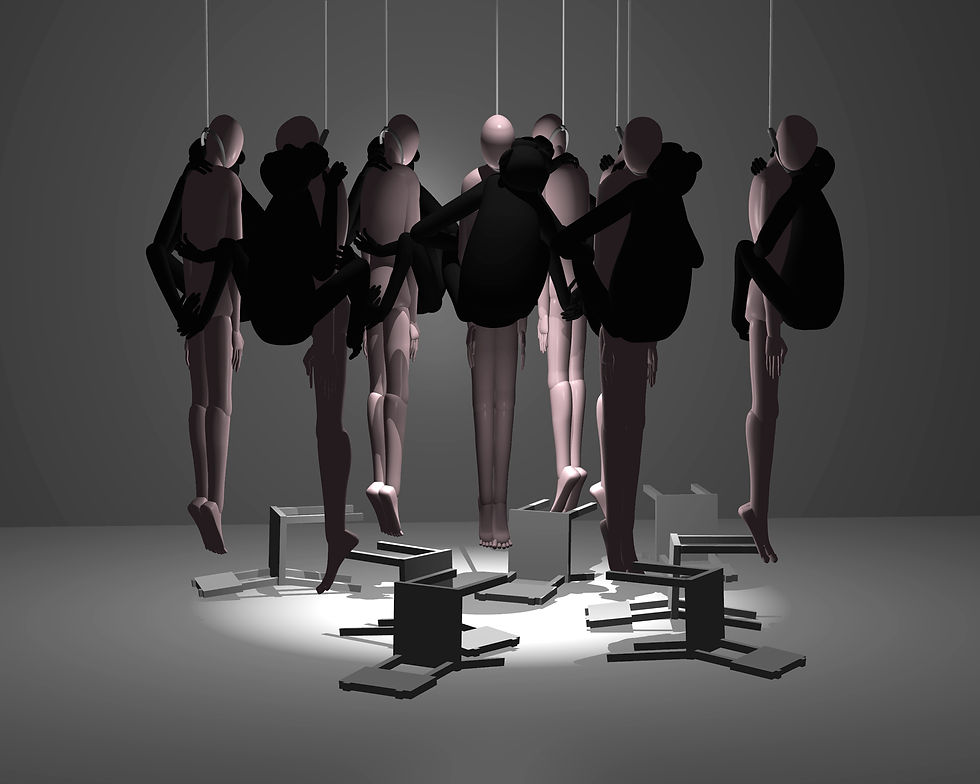
Figure 6: Yves Netzhammer, Die Möbel der Proportionen (Furniture of Proportions)
2008, video still
The power of his work stems from this projected empathic connection, a "feeling of the temporary dissolution of the boundary between the self and others" [2]. Netzhammer addresses the viewer's capacity for empathy directly; the relationship is built "on a reflection of physical sensation," leading to the recognition of gestures despite their digital abstraction and ambivalence [2].
The poiesis, the creation of meaning, occurs in this transference: the viewer translates the purified, diagrammatic signs back into the complex realm of subjective feeling. The smooth digital surfaces of the bodies are often opened up, creating metaphorical exchanges between interior and exterior, traversing "a fine border where brutality and gentleness permeate and transpose each other" [2].

Figure 6: Yves Netzhammer, Die Subjektivierung die Viederholen
( The Subjectivisation of Repetition), video still, 2007
The Subjectivisation of Repetition
This complex interplay of objective form and subjective experience was fully realized in Netzhammer's installation for the Swiss Pavilion at the 2007 Venice Biennale. Titled The Subjectivisation of Repetition, the project involved a significant architectural / sculptural intervention: a steep, 18-degree inclined plane that penetrated the pavilion, shifting the relationship between inside and outside and sharpening "the awareness of one’s own body within an enclosed space" (4).

Figure 7: Yves Netzhammer, The Subjectivisation of Repetition, Project A,
Installation view of the Swiss Pavilion at the Venice Biennale, 2007
This constructed "narrative level" became the stage for an immersive experience combining large-scale stencilled images, video projections exploring stereotypes of "the alien" (4), and a 14-channel soundtrack by Bernd Schurer playing throughout the space (4). The installation demonstrated how Netzhammer uses the diagrammatic principles of reduction, repetition, and visual arrangement not just on screen, but also within the world of spatial design, guiding the viewer through a physical and psychological landscape.
A Universe of "Concave Thoughts"
The drawings that form the basis of Netzhammer's practice have been described by Damian Christinger as "Concave Thoughts" [3]. The metaphor suggests a concave mirror that both distorts reality and focuses light intensely. Netzhammer's diagrams similarly reflect our world in bizarre, uncanny ways, while their clinical precision focuses our attention on core philosophical questions.
Figure 8: Yves Netzhammer, digital drawings from 'Concave Thoughts',
a book of 357 Digital Drawings, published 2017
Christinger draws a compelling parallel between Netzhammer's computer-generated lines and prehistoric cave paintings, suggesting both are attempts to draw a boundary against the overwhelming complexity of existence, "a border between the recognizable—and thus understandable—and the infinity of space" (3). Netzhammer's drawings, Christinger argues, are not an alphabet aiming for truth, but "concave signs of a concave thinking," a subversive, non-linear system that resists definitive interpretation (3])
When I contacted Netzhammer in 2013 regarding the role of the diagram in his work, he elaborated on this deliberate use of a paradoxical format:
"It started, in my case, in looking for another way to show a new form of subjectivity. I positioned the computer between me and my thoughts/wishes. I guess, I prefer the diagrammatic “style”, because I’m really trying to find “something” (connected to philosophical questions). Not in the common scientific sense of discovery, but something which appears close to our questions about identity. I hope that an artistic approach to forms of empathy can generate such results, especially, when it comes in a paradoxical format like drawings, which stands in the tradition of explanation."
Here, the artist himself articulates the core tension of his practice, aligning perfectly with the concept of "Romantic-Objectivism." He consciously employs a visual language rooted in the tradition of objective explanation—the diagram—precisely to explore and evoke the most subjective, intuitive, and empathic dimensions of human experience.
Gallery:
Yves Netzhammer, Shadow Thickness, 2011, Paracelsus Building, St. Moritz, Switzerland
References:
1) Barthes, R. (1980). The Plates of the Encyclopedia. In R. Howard (Trans.), New Critical Essays (pp. 23–39). Hill and Wang. (Original work published 1964).
2) Frankfurter Kunstverein. (2019). Empathic Systems: Yves Netzhammer [Exhibition text].
3) Christinger, D. (2017). Konkave Gedanken zum konkaven Denken [Concave Thoughts on Concave Thinking]. In Yves Netzhammer: Concave Thoughts. Diaphanes.
4) Zulauf, T. (2007). Yves Netzhammer: The subjectivisation of repetition, project B [Text for Swiss Pavilion, Venice Biennale].


Comments