Cosmic diagrams from the sacred heart of the alchemical laboratory.
Updated: Dec 9, 2025
❉ This is the fourth in a series of blogs that discuss diagrams in the arts and sciences. I recently completed my PhD on this subject at Kyoto city University of the Arts, Japan's oldest Art School.
Feel free to leave comments or to contact me directly if you'd like any more information on life as an artist in Japan, what a PhD in Fine Art involves, applying for the Japanese Government Monbusho Scholarship program (MEXT), or to discuss diagrams and diagrammatic art in general.
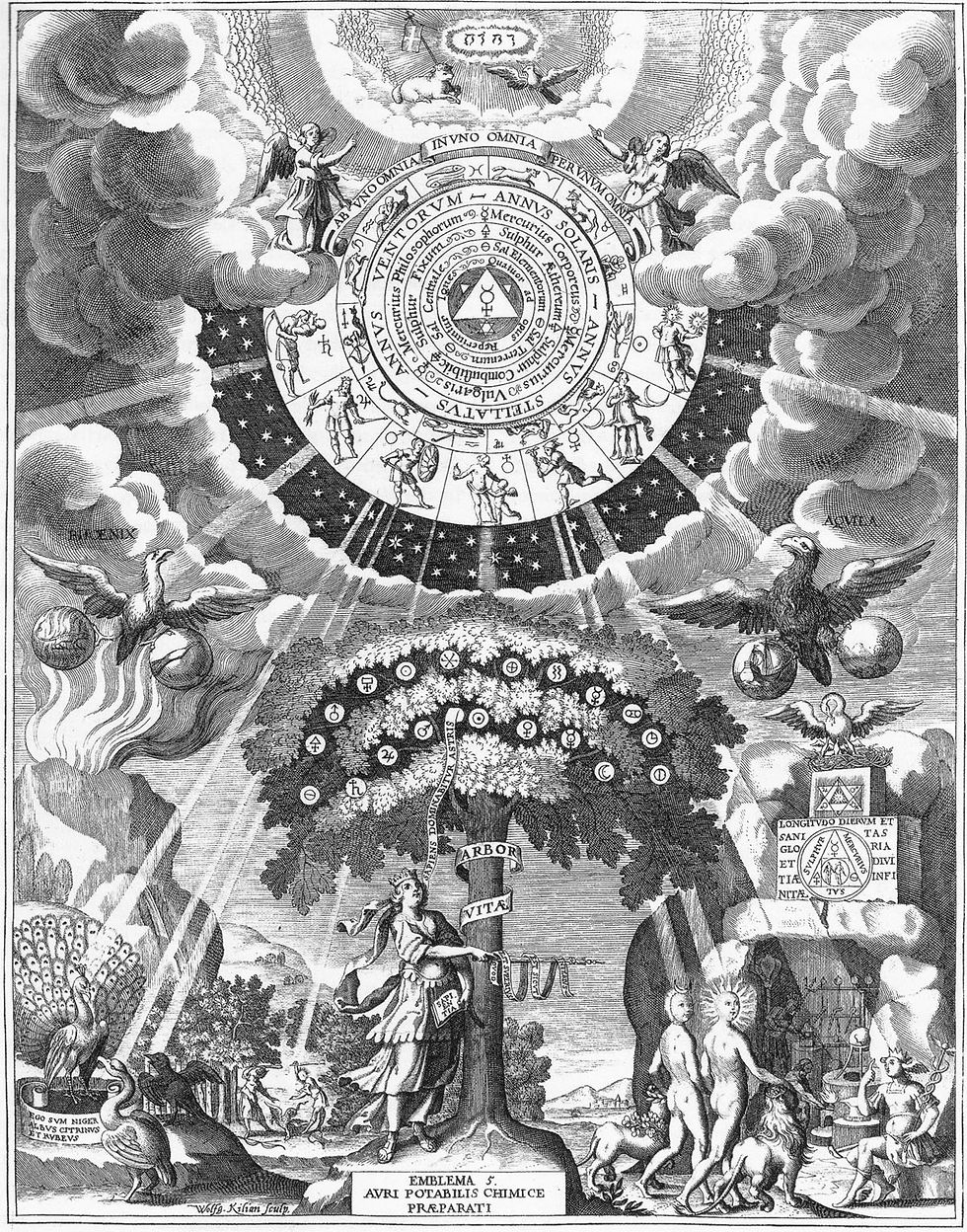
Figure 1: Matthäus Merian, Tabula Smaragdina (The emerald tablet)
first published 1618, Engraving, size unknown.
The word "alchemy" itself offers a clue to its profound nature. It has Arabic origins, and like other English 'al' words such as algebra and algorithm, it incorporates the definite article 'al', meaning 'the'. Alchemy is derived from the Arabic al-kīmiyā’, a term referring to the philosopher's stone. This idea of a legendary substance often conjures a caricature: a medieval sorcerer hunched over bubbling potions, obsessed with turning lead into gold.
But this is a profound misunderstanding of the "Great Work" (Opus Magnum). Alchemy was a complex philosophical and spiritual discipline aimed at achieving enlightenment and understanding the divine order of the cosmos. Its true goal was not the creation of wealth, but the transmutation of the soul.
The practice of alchemy itself has a rich and convoluted history that predates its Arabic influences, spanning some 4000 years. Similar philosophical systems appear to have arisen independently, giving rise to distinct Chinese, Indian, and Western traditions. The lineage of Western alchemy, which will be the focus of this post, can be traced from its origins in Greco-Roman Egypt through the Islamic world to Medieval Europe.

Figure 2: Matthäus Merian, Analogy of the Microcosm and Macrocosm of Alchemy,
from Johann Daniel Mylius' Opus Medico-Chymicum, 1618
To map this complex and secret knowledge, alchemists needed a special language. This knowledge was considered sacred and dangerous, needing protection from the uninitiated, the profane, and the Church, which often viewed such practices with suspicion. Linear text, with its straightforward logic, was not only insufficient but also too transparent. It implies a simple sequence, like a common recipe, whereas the Opus Magnum involved cyclical processes and simultaneous transformations in both the material and spiritual realms.
They found their perfect medium in symbolic diagrams, which served multiple functions simultaneously.
A Secret Language in Plain Sight
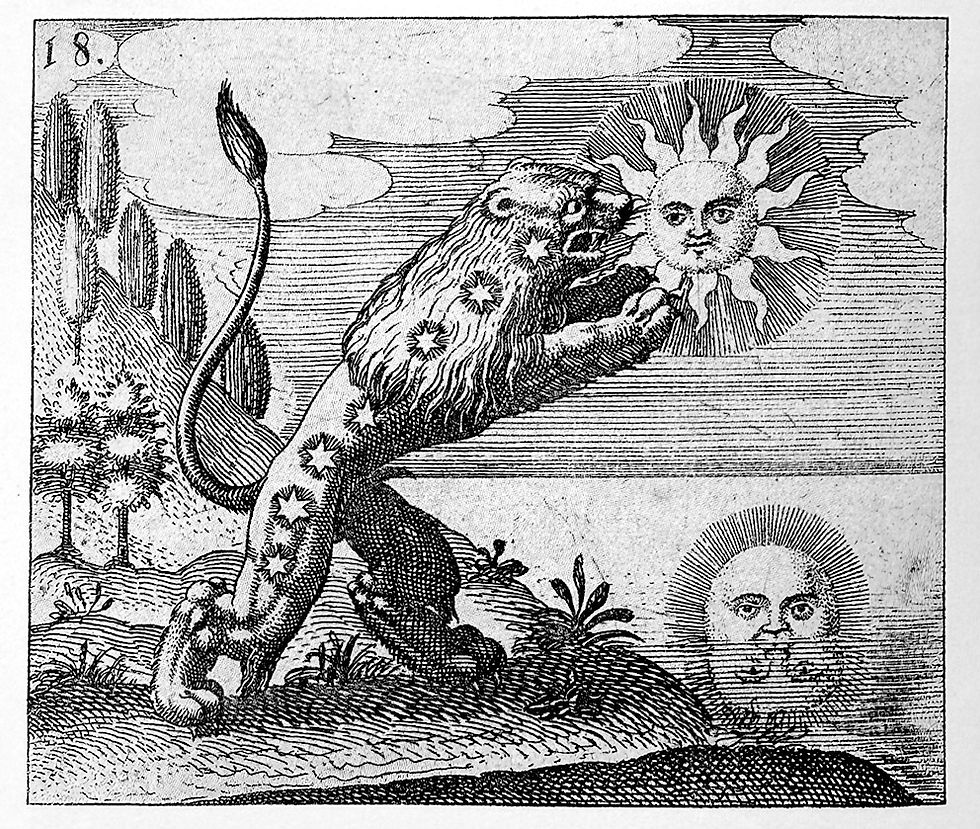
Figure 3: D. Solcius ve Stolcenberg, Blood of the Green Lion,
Viridarium chymicium, Frankfurt, 1625
First, it was a form of visual encryption. By using a rich vocabulary of obtuse symbols—a green lion devouring the sun, a king and queen bathing together, a seven-headed dragon—the diagram acted as a lock. To the uninitiated, it was a beautiful but nonsensical image; to the adept who held the key, it was a detailed set of instructions.

Figure 4: Michael Maier, Ouroboros, Atlanta Fugiens, Oppenheim, 1618
Second, the diagram could escape the restraints of linear time. Unlike a sentence, which must be read in a fixed order from beginning to end, a diagram is a spatial field of relationships. It can represent the cyclical nature of the Great Work—like the Ouroboros eating its own tail—in a single, immediate image. It allows the adept to contemplate multiple processes happening at once, seeing the connections between the planets above, the metals below, and the psychological state within.

Figure 3: Heinrich Jamsthaler, Rebis, Vistorum Spagyricum, 1625
Finally, a diagram could embody transformation itself. The "chemical wedding" of the King (Sol) and Queen (Luna), their dissolution into a single substance in the Nigredo, and their rebirth as the two-headed Rebis could be shown in a powerful sequence of images. This captured a fluid, almost dream-like metamorphosis that words can only describe. The diagram, therefore, was not just a map; it was a contemplative tool designed to awaken the intuitive understanding necessary to perform the Great Work.
Opus Magnum / 'The Great Work' : A Four-Fold Path

Figure 4: Johann Daniel Mylius, Emblems From Philosophia Reformat, Frankfurt, 1622
At the heart of alchemy is the Opus Magnum, a process of transformation classically understood as a four-fold path. Each stage is marked by a distinct color change and is symbolically linked to one of the four classical elements, representing a profound shift in both the material being worked on and the psyche of the alchemist.
Nigredo (blackening): First is the stage of decomposition, spiritual death, and dissolution. This corresponds directly to the element of Earth , representing the dark, solid, chaotic matter from which new life must spring.
Albedo (whitening): This is followed by a purification that washes away the impurities of the Nigredo to reveal a new, reborn essence. This stage is strongly associated with Water and its cleansing, reflective properties.
Citrinitas (yellowing): Next is the "yellow dawn" that represents the first light of the spiritual sun. It is a crucial transitional phase linked to the element of Air, as the matter becomes more spiritual and vaporous, preparing for its final perfection.
Rubedo (reddening): The final stage is the achievement of the Philosopher's Stone and the divine union of opposites. It is fully associated with Fire, the agent of the ultimate and most powerful transformation.
Over time, particularly from the 15th century onward, this four-stage sequence was often simplified. The Citrinitas was frequently absorbed into the Rubedo, with alchemical writers focusing on the more archetypally potent triad of black, white, and red to represent the core transformations of death, purification, and perfection.
This four-stage journey was depicted in a rich vocabulary of symbols. We see the Sun (Sol) and Moon (Luna) representing the masculine and feminine principles that must be united in a 'chemical wedding.' We see the Ouroboros—the snake eating its tail—symbolizing the eternal, cyclical nature of the work. And we see the final goal achieved in the Rubedo in the form of the Rebis, a divine, two-headed hermaphrodite who represents the perfected union of all opposites.

Figure 4: Frontispiece of 'The Dissertatio De Arte Combinatoria'
(Dissertation on the Combinatorial Art)
Gottfried Wilhelm von Leibniz - Opera Omnia, 1768
This four-fold structure, representing a complete system of transformation, was not exclusive to alchemy. As the scientific revolution gained momentum, this ancient model was reinterpreted through a more systematic and logical lens. A pivotal figure in this transition was Gottfried Wilhelm Leibniz. The frontispiece to his 1690 work De Arte Combinatoria provides a perfect diagram of this shift. It also begins with a four-part foundation: Aristotle's four classical elements and their qualities.
However, Leibniz’s goal was not mystical transmutation but logical combination. He envisioned a 'universal language' (Characteristica Universalis) based on an 'alphabet of human thought', proposing that all complex ideas were simply combinations of these basic concepts. While inspired by earlier systems like the Ars Magna of Ramon Llull, Leibniz sought a purely rational system to map the 'source code' of reality. This quest to find a fundamental, underlying logic to the universe was a defining feature of the era, placing him in the same intellectual space as his contemporary and rival. While Leibniz sought this code through combinatorial logic, another great mind of the age pursued it on parallel tracks.

Fig. 3: Isaac Newton (1643 - 1723), copy of a diagram of the Philosopher's Stone
( Grace K. Babson Collection of the Works of Sir Isaac Newton on permanent deposit at the
Dibner Institute and Burndy Library, Cambridge, Massachusetts )
This was no fringe pursuit. No less a figure than Isaac Newton devoted a great deal of his time to alchemy, amassing 169 books on the topic. Studying Newton's papers, the economist John Maynard Keynes famously proclaimed that "Newton was not the first of the age of reason, he was the last of the magicians." This reframes Newton’s work not as a contradiction, but as a unified quest to find the underlying, divine code of the universe—a quest he shared with Leibniz, even if their methods differed.
The Inner Laboratory: Alchemy as a Map of the Psyche

Figure 5: Stephan Michelspacher, Cabala, Spiegel der Kunst und Natur,
Mirror of Art and Nature, In: Alchymia, 1615
In the 20th century, the Swiss psychiatrist Carl Jung offered a revolutionary lens through which to view these strange diagrams. While studying the symbolic, often archetypal images that appeared in his patients' dreams, he was astonished to find the very same symbols staring back at him from the pages of centuries-old alchemical texts.
He proposed that the alchemical operations were not primarily about transmuting metals, but were a projection of a profound psychological drama. For Jung, the alchemical operations were real, only this reality was not physical but psychological. Alchemy represents the projection of a drama both cosmic and spiritual in laboratory terms. In his own words: "The opus magnum [“great work”] had two aims: the rescue of the human soul, and the salvation of the cosmos.” (1)
Jung believed that the alchemists, in their laboratories, were unconsciously projecting the processes of their own psyches onto matter. The recurring figures—the King and Queen, the divine hermaphrodite, the Ouroboros—were not just chemical codes but archetypes: universal, primal symbols emerging from the collective unconscious.
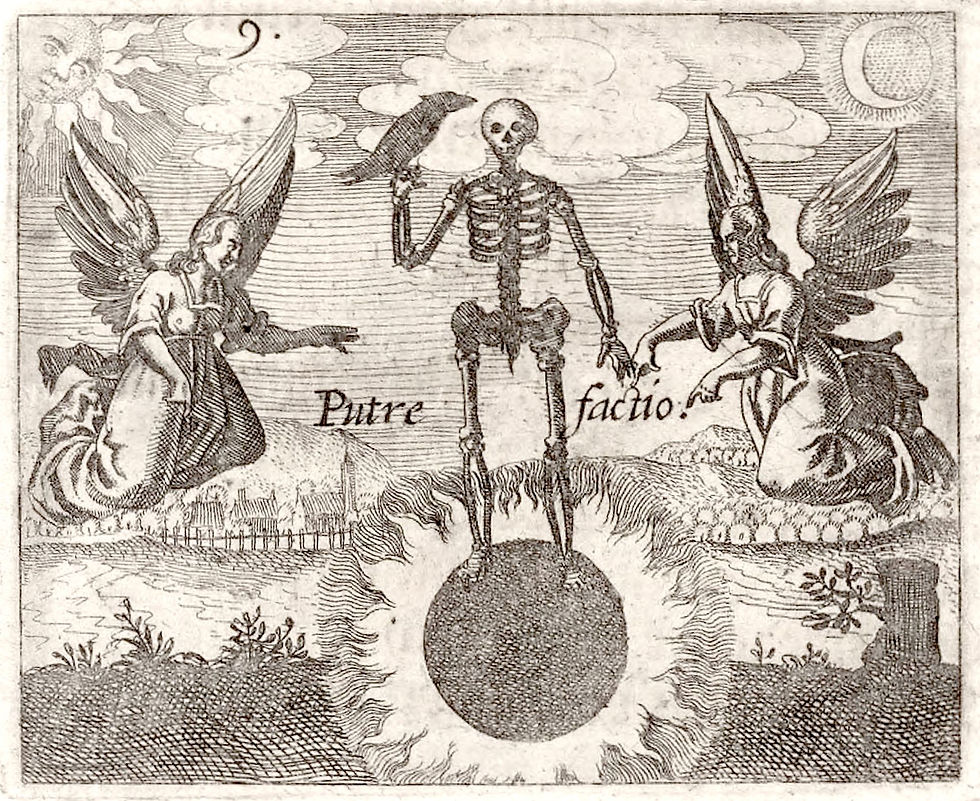
Figure 6: D. Stolcius von Stolcenberg, Putre Factio (Nigredo)
In: Viridarium Chymicum, Frankfurt, 1624
For Jung, the entire Opus Magnum was a symbolic map of individuation—the lifelong process of integrating the conscious and unconscious parts of the personality to become a whole, balanced Self. Each alchemical stage corresponded to a critical phase of this inner journey. The nigredo (blackening) was a metaphor for the "dark night of the soul," a painful but necessary confrontation with the Shadow—the repressed, dark aspects of one's own personality.
The Albedo (whitening) that followed represented purification and the illumination that comes from this self-knowledge. Finally, the Rubedo (reddening) and the "chemical wedding" (coniunctio) symbolized the union of opposites within the psyche—conscious and unconscious, masculine and feminine (animus and anima). The creation of the Philosopher's Stone was, for Jung, the ultimate symbol of achieving the fully realized and integrated Self.
According to the Rosicrucian Michael Maier, the goal of alchemy was “to reach the intellect via the senses” (2). This is an interesting reversal of the premise of my own thesis, 'Romantic Objectivism', which proposes that modern diagrammatic art attempts to reach the senses via the intellect. Yet the goal remains the same: to trigger intuitive insights into the deep connections that structure our reality. Ultimately, alchemy marks a crucial moment in the history of thought. It represents one of humanity's first systematic attempts to chart the inner world, giving rise to an explosive growth of diagram production driven by the desire to create a map for the psyche's own transformation.
Below is a selection of emblems from Michael Maier’s 1618 masterpiece, Atalanta Fugiens. These are far more than beautiful and cryptic illustrations; they are sophisticated diagrams that function as philosophical machines on paper. Each of the 50 emblems in the book is a self-contained visual argument, using a rich symbolic language—kings, monstrous animals, and planetary signs—to map a specific stage of the alchemical Opus Magnum.
They are not static pictures but dynamic tools for contemplation, designed to be decoded alongside their accompanying text and music to trigger intuitive insights. In their intricate layers of meaning, they represent the pinnacle of diagrammatic art, created to explain a process that was at once chemical, cosmic, and psychological.
Gallery:
Emblem 1: The Wind carried him in its belly Emblem 2: The Earth is his Nurse Emblem 8: Take the egg and smite it with a fiery sword Emblem 10: Give fire to fire, Mercury to Mercury, and you have enough Emblem 12: The Stone which Saturn vomited up... is placed on the Helicon as a monument to men Emblem 14: This is the Dragon that devours his tail Emblem 16: One lyon hath wings and the other hath none. Emblem 17: Four orbs govern this work of fire. Emblem 20: Nature teaches Nature how to subdue Fire Emblem 21: Make of the man and woman a Circle, of that a Quadrangle, of this a Triangle... Emblem 23: When Pallas was born and Sol was in conjunction with Venus it rained gold at Rhodes Emblem 25: The Dragon does not die unless he be slain by a Brother and a Sister, Sol and Luna Emblem 29: As the Salamander lives in the fire, so also the Stone Emblem 30: Luna is as requisite to Sol as a Hen is to a Cock Emblem 31: The King swimming in the Sea cries out: He that delivers me shall have a great reward Emblem 32: As Coral grows under water and is hardened by the air, so also is the Stone Emblem 33: The Hermaphrodite, lying like a dead man in darkness, wants Fire Emblem 36: The Stone that is Mercury, is cast upon the Earth, exalted on Mountains, resides in Air.. Emblem 38: Rebis is a Hermaphrodite produced from the two mountains of Mercury and Venus Emblem 39: Oedipus having overcome Sphinx and killed his father Laius, married his mother Emblem 42: Nature, Reason, Experience, and Reading must be the Guide, Staff, Spectacles, and Lamp... Emblem 45: The Work is perfected by Sol and his Shade Emblem 47: The Wolf coming from the West and the Dog coming from the East have bitten each other Emblem 50: The Dragon kills the woman, and she kills it, and together they bathe in the blood
References:
1) Jung, C. G. (1968). Psychology and Alchemy (R. F. C. Hull, Trans.). The Collected Works of C.G. Jung, Vol. 12, Princeton University Press. (paragraph 448).
2) Roob, Alexander. (1997). The Hermetic Museum: Alchemy and mysticism, 2001, Taschen GmbH


Comments