Diagrams of Geometry Part 2: A Soggy Book of Diagrams as a Wedding Present from Marcel Duchamp
Updated: Nov 3, 2025
❉ This is the ninth in a series of blogs that discuss diagrams and the diagrammatic format, especially in relation to fine art. I recently completed my PhD on this subject at Kyoto City University of the Arts, Japan's oldest Art School. Feel free to leave comments or to contact me directly if you'd like any more information on life as an artist in Japan, what a PhD in Fine Art involves, applying for the Japanese Government Monbusho Scholarship program (MEXT), or to talk about diagrams and diagrammatic art in general.

Figure 1: Portrait of Marcel Duchamp for Life Magazine taken in 1952 by Gordon Parks,
in front of Network of Stoppages (1914), Oil and pencil on canvas, 148.9 x 198.12 cm
In 1912, the poet Jacques Nayral observed that, “The Mathematical spirit seems to dominate Marcel Duchamp. Some of his pictures are pure diagrams, as if he were striving for proofs and synthesis” (1). This was no accident.
As we've seen previously, Duchamp's artistic training was founded upon the diagram during a period when French art education prioritized the mechanical "language of industry" (2). Duchamp embraced this, proclaiming his desire to create "paintings of precision" with a "beauty of indifference" (3).
He also spoke in interview of how he wished to "go back to a completely dry drawing, a dry conception of art. I was beginning to appreciate the value of exactness, of precision and the importance of chance… And the mechanical drawing was for me the best form of that dry conception of art… a mechanical drawing has no taste in it. (4)
The Beauty of Indifference
The evolution of this "dry conception of art" is clearly visible in his two paintings of a chocolate grinder. Chocolate Grinder (No. 1) (1913) still relies on traditional techniques like graded color and shadow to create the illusion of three-dimensionality.

Figure 2: Marcel Duchamp, Chocolate Grinder (No. 1), 1913, Oil on canvas, 61.9 x 64.5 cm
© Artists Rights Society (ARS), New York / ADAGP, Paris / Estate of Marcel Duchamp
But in Chocolate Grinder (No. 2) (1914), the object is presented in a blank conceptual landscape—a neutral, shadowless environment of flat color and strict one-point perspective. It has been stripped of artistic flourish and rendered with the cold precision of a technical diagram.

Figure 3: Marcel Duchamp, Chocolate Grinder (No. 2), 1914,
Oil, graphite, and thread on canvas, 65.4 x 54.3 cm
© Artists Rights Society (ARS), New York / ADAGP, Paris / Estate of Marcel Duchamp
An Attack on Measurement
However, Duchamp's goal was not simply to celebrate objectivity; it was to use the tools of logic to subvert logic itself. Having established a mechanical system, he immediately sought to break it with chance and chaos. His most important gesture in this direction was 3 Standard Stoppages (1913–14). For this work, he dropped three one-meter-long threads from a height of one meter, carefully tracing the random, curved shapes they made upon landing. He then cut these new, "canned chance" shapes into wooden rulers.
These "diminished meters" were presented in a box as an alternative, and personal, system of measurement (8). It was a witty and profound attack on the very idea of a "standard" unit of length. Asked what he considered to be his most important work, Duchamp replied that "As far as date is concerned I'd say the Three Stoppages of 1913. That was when I really tapped the mainspring of my future. In itself it was not an important work of art, but for me it opened the way - the way to escape from those traditional methods of expression long associated with art … For me the Three Stoppages was a first gesture liberating me from the past.' (5).

Figure 4: Marcel Duchamp, 3 stoppages étalon (3 Standard Stoppages),
1913–4, replica 1964, Wood, glass and paint on canas, 400 x 1300 x 900 mm
Duchamp was not working in a vacuum. The intellectual climate of the early 20th century was rife with challenges to established truths. In "Science and Hypothesis" (1902) for example, the mathematician, theoretical physicist, engineer, and philosopher of science Henri Poincaré posed the question of whether or not it would be 'unreasonable to inquire whether the metric system is true or false?'
At almost the same time, two other noteworthy figures, Hermann Minkowski and Albert Einstein, were dismantling a worldview that had stood for over 2000 years (6). By applying the then-radical principles of non-Euclidean geometry to physics, they were redefining the very fabric of reality. Their work showed that space and time were not the flat, absolute certainties of classical geometry, but a dynamic, curved space-time continuum.
Also of special interest to Duchamp at that time was the work of the French humorist Alfred Jarry (1873-1907), creator of Pataphysics, or the 'science of imaginary solutions'. Jarry developed this imaginary subject to "examine the laws governing exceptions, and … explain the universe parallel to this one", and it is easy to see how Duchamp was drawn to such a novel, humorous and profoundly revealing idea with its suggestions of alternative realities with their own physical laws. (7)
A Clash of Systems: The Network of Stoppages
Duchamp later used the wooden templates from his 3 Standard Stoppages to create one of his most complex and revealing paintings, the Network of Stoppages (1914). This work is a crucial bridge between his early experiments and his magnum opus, The Large Glass.
What makes the painting so significant is its method of construction: Duchamp took the lines derived from "canned chance" and superimposed them directly onto a rotated replica of his earlier, more lyrical painting, Young Man and Girl in Spring (1911).

Figure 5: Marcel Duchamp, Young Man and Girl in Spring, oil on canvas, 1911
This act of layering is a profound diagrammatic argument in itself. It stages a direct, visual confrontation between two opposing systems of representation. In the background, we have the faint, romantic imagery of a symbolic fertility rite, representing a traditional, subjective mode of art.
Laid over this, in stark black lines, is the network created by an arbitrary, objective, and anti-expressive process. It is a visual clash between the organic and the mechanical, the mythic and the random.

Figure 6: Marcel Duchamp, Network of stoppages (Reseaux des stoppages),
1914, oil and pencil on canvas, 198 x 149 cm
This painting is one of the clearest examples of what I call the "Romantic-Objective" contrast; it literally layers an objective system over a subjective one, making the act of superimposition the core of the work's meaning. This very network of lines would later be transferred directly onto his masterwork, The Bride Stripped Bare by her Bachelors, Even (The Large Glass).
A Geometry Lesson from the Weather
Perhaps the most poetic and destructive of Duchamp's challenges to ideal forms was his Unhappy Readymade (c. 1919). Foreshadowing the instruction-based art of Sol LeWitt, the work consisted of a set of instructions sent by post as a wedding gift to his sister Suzanne and her husband, the artist Jean Crotti, so that, in the words of LeWitt, “the Idea becomes a machine that makes the art.” (8) In an interview with Pierre Cabanne, Duchamp described his request for Crotti to buy a
"…geometry book which he had to hang by strings on the balcony of his apartment in the rue Condamine; the wind had to go through the book, choose its own problems, turn and tear out the pages. Suzanne did a small painting of it, ‘Marcel’s Unhappy Readymade.’ That’s all that’s left, since the wind tore it up. It amused me to bring the idea of happy and unhappy into readymades, and then the rain, the wind, the pages flying, it was an amusing idea… " (9)

Fig. 7: Unknown artist, Photograph
of Unhappy Readymade, 1920
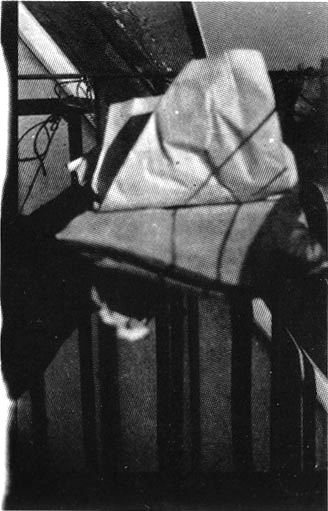
Fig. 8: Suzanne Duchamp, Unhappy Readymade, oil on canvas, 1920

Fig. 9: Marcel Duchamp, Unhappy Readymade,
Box in a valise version, re-touched photograph, 1935 - 41
The work existed only briefly before it was destroyed by the elements, leaving behind only a small painting by Suzanne and a photograph. The act was a multi-layered commentary. As the scholar Linda Dalrymple Henderson notes, by using a copy of Euclid's Elements, Duchamp was ironically subjecting the perfect, ideal forms of plane geometry to the chaotic forces of wind and rain, which produced "non-Euclidean deformations of the Euclidean geometries in the text" (10).
Duchamp himself suggested that in its exposure to the weather, "the treatise seriously got the facts of life" (11). Duchamp also suggests that this is a lesson to be repeated, a reminder of the fundamental difference between an essentialised, idealised, conceptual landscape of perfect forms, and the chaotic nature of decay and change, which composes our everyday experience of the real world. Some years later Duchamp told one interviewer that “he had liked disparaging ‘the seriousness of a book full of principles,’ and suggested to another that, in its exposure to the weather, ‘the treatise seriously got the facts of life’”. (12)
The Unhappy Readymade is a poignant and humorous diagram of the conflict between the idealized, conceptual landscape of perfect forms and the messy, chaotic nature of reality.
Gallery:
While Duchamp's use of diagrams to question logic through art was revolutionary, the impulse to clarify geometry through visual systems has a fascinating history. Almost a century earlier, the Victorian mathematician Oliver Byrne published a remarkable 1847 edition of Euclid's Elements.
Titled "The First Six Books of the Elements of Euclid in Which Coloured Diagrams and Symbols Are Used Instead of Letters for the Greater Ease of Learners", Byrne's edition replaced the abstract alphabetic labels of traditional geometry with vibrant primary colors. Lines, angles, and shapes were printed in brilliant red, yellow, and blue, allowing the reader to follow the logical proofs through a purely visual, almost intuitive process, predating the Modernist work of Dutch artist Piet Mondrian by almost a Century.
Downloadable copies are available in various formats courtesy of an Internet Archive at the University of Toronto Libraries here: Downloadable formats
Or as a pdf here: Downloadable pdf.
References:
1) Nayral, J. (1912) preface to Galeries J. Dalmau, Barcelona. Exposció de Arta cubista. (April – May 1912) Reprinted in Guillaume Apollinaire: Les Painters Cubistes. Breunig, L.C., Chevaliare J. Cl. Paris: Hermann (1965) p. 181
2) Nesbit, M. (1991) The Language of Industry. In: The Definitely Unfinished Marcel Duchamp. De Duve, T. (Ed.) Massachusetts: Cambridge: The MIT Press, 1991. pg.356.
3) Duchamp, M. Salt Seller: The writings of Marcel Duchamp (Marchand du sel). Eds. Sanouillet, M. Peterson, E. New York: Oxford University Press, 1973. p. 30.
4) Duchamp, M. As quoted in Sweeney, A conversation with Marcel Duchamp, NBC Television interview, January 1956. Sweeney, J.J. (1946) Eleven Europeans in America: Marcel Duchamp. Museum of Modern Art Bulletin 13, p. 19-21. In: Dalrymple Henderson, L. (1998) Duchamp in context: Science and technology in the large glass and related works. New Jersey: Princeton University Press.
5) Duchamp, quoted in: Katherine Kuh, The Artist's Voice: Talks with Seventeen Artists, New York 1962, p.81.
6) Henri Poincaré quoted in: Herbert Molderings, 'Objects of Modern Scepticism', in Thierry de Duve (ed.), The Definitively Unfinished Marcel Duchamp, Cambridge, Massachusetts 1991, pp.243-65, reproduced p.247 Arturo Schwarz, The Complete Works of Marcel Duchamp, revised and expanded edition, New York 1997, pp.594-6, reproduced pp.594, 595, 596
7) Alfred Jarry quoted in: Dawn Ades, Neil Cox and David Hopkins, Marcel Duchamp, London 1999, pp.78-9, reproduced p.78
8) LeWitt, S. (1967) Paragraphs on Conceptual Art. Art Forum. June, 1967
9) Cabanne, P. (1971) Dialogues with Marcel Duchamp. Originally published: London: Thames and Hudson. p. 61.
10) Dalrymple Henderson, L. (2013) The Fourth Dimension and non-Euclidean geometry in Modern Art. 2nd Revised Edition. Massachusetts Institute of Technology. p. 283.
11) Duchamp, M. (1920) Letter to Suzanne Duchamp. In: Affectueusement, Marcel: Ten Letters from Marcel Duchamp to Suzanne Duchamp and Jean Crotti. (1982) Francis Naumann, M. Archives of American Art Journal, Vol. 22, No. 4. pp. 2-19.
12) Tompkins, C. (1998) Duchamp: A Biography. New York: Henry Holt and Co. Inc. p.212-214

Comments